
Why Do We Care About James Beard?
First off, congrats to all of this year’s official James Beard award nominees! There must have been some kind of mistake because we weren’t nominated, but we know things can slip through the cracks sometimes, we’re sure Mr. Beard has a lot on his plate…
Just kidding. He cleared it already and is looking for seconds.
“Fuggetahboutit!,” was something James Beard said often.
OK I don’t know much about James Beard tbh, but I will after I eat…I mean read John Birdsall’s book about him that he graciously signed for me at a panel Chris and I went to during Cookbook Week. The panel was about “Queer Food,” and it left me with a new appreciation for Zuni Cafe and its role in re-shaping SF’s towards the LGBTQ+ community – the owner who was gay, Birdsall said, intentionally hired gay servers and also intentionally set up his restaurant in between the Castro and Downtown. Straight politicians went there to do business because it was that kind of fancy place, and in the process were forced to confront textbook faggotry. It helped normalize gay people for them and goes to show that a restaurant can be so much more than just a place to go eat, no matter how dry their chicken might be.
Other panelists included Soleil Ho, Jon Kung, and Justin Burke, who were all asked about queer food and how they relate to it. The panelists gave great answers, but I wish the panelist’s questions weren’t all about identity. I understand where the moderator was coming from, but as Soleil said in that panel we are post-identification-as-representation. Sam Altman and Peter Theil are all examples of gay representation, they pointed out – and that is progress. But that’s not the type of representation we talk about When We Talk About Queer Representation. Likewise, queer food to many people is a mere slice of rainbow cake. It may be if a queer person makes it (don’t ask Justin to make you one), but is a rainbow cake inherently queer? If a straight person has a slice, does that mean they’re gay? (only if they wash their butt)
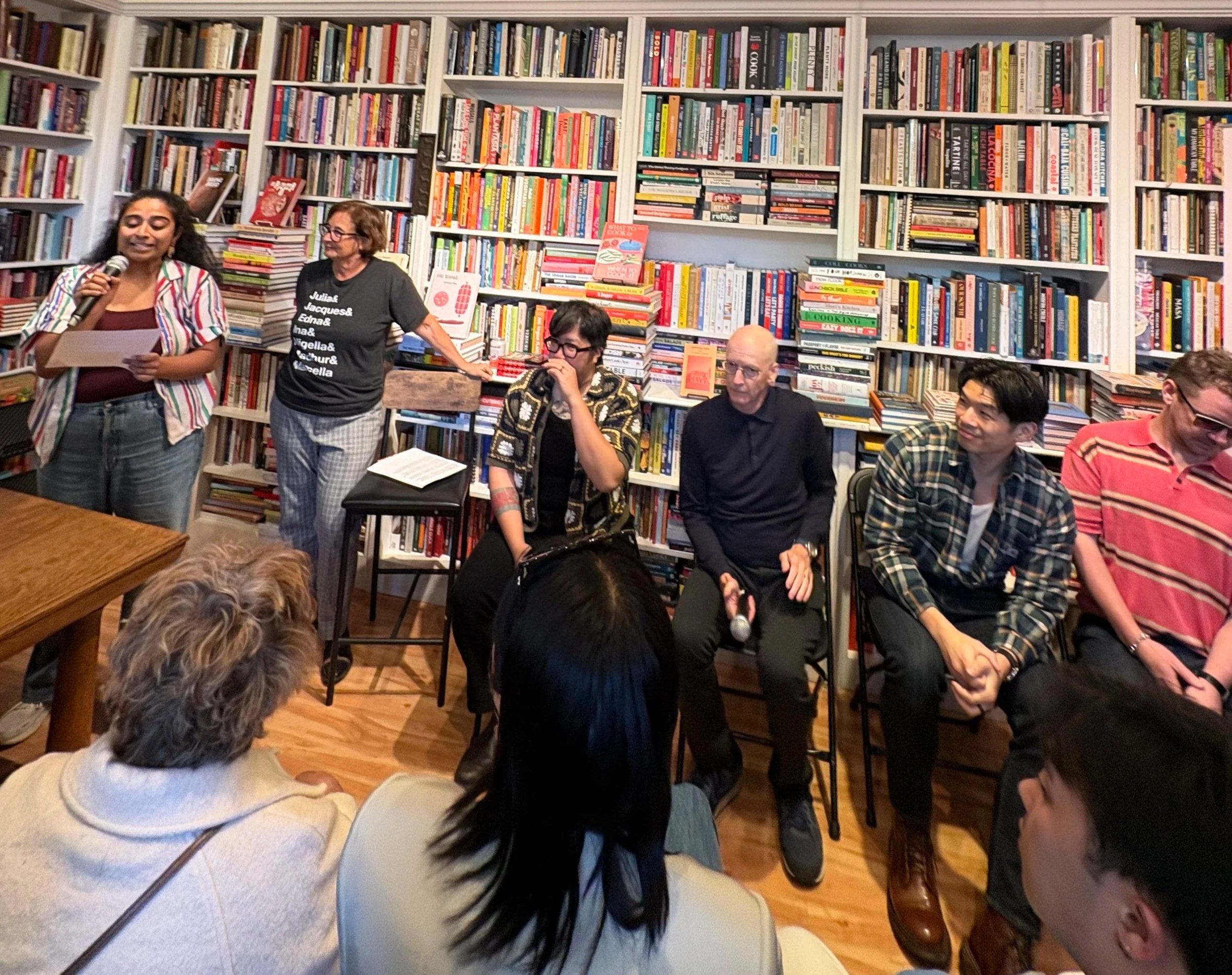
This is a really good photo I took of the panel.
James Beard was openly gay, in a time where you just didn’t do that. He was representation incarnate. It’s unlikely that Beard would have felt comfortable calling himself queer, which wasn’t reclaimed from being a slur until after he died, but it’s unquestionable that he’s a queer icon. Beard exhibited more of the nebulous qualities of queer-as-doing, not just gay-as-being. According to Wikipedia (I’m sorry John I will read your book), he published several “firsts” – the first cookbook dedicated to food meant to be eaten with cocktails (how did people not know?? (you always know)), the first cookbook dedicated to outdoor cooking. He was an early pioneer in the cooking show space, and he taught both chefs and housewives how to cook and what to cook with. He endorsed products and preached the joys of eating well to people who didn’t have a framework to know what that means. He is known as the “first foodie.” He was one of the first food influencers, and we still feel his influence today, not just in the prestigious awards his foundation gives out.
But beyond being a gay food influencer, he was arguably more transgressive in his pursuit of enjoyment. Remember, we were founded by Protestants; he unapologetically undermined our values of speed and efficiency by preaching aestheticism – as a man mind you, at a time when men on TV were patriarchs with families to take care of or cowboys that didn’t shower. And people listened. Why would you heat up a casserole in a can to save time when you could spend the time making a much better casserole from scratch? He gave us gay hedonists a framework to live by while giving America a cuisine to take pride in. Obviously John, there is so much more to be said. But at the end of the day, it’s not so complicated.
When daddy speaks, you listen.
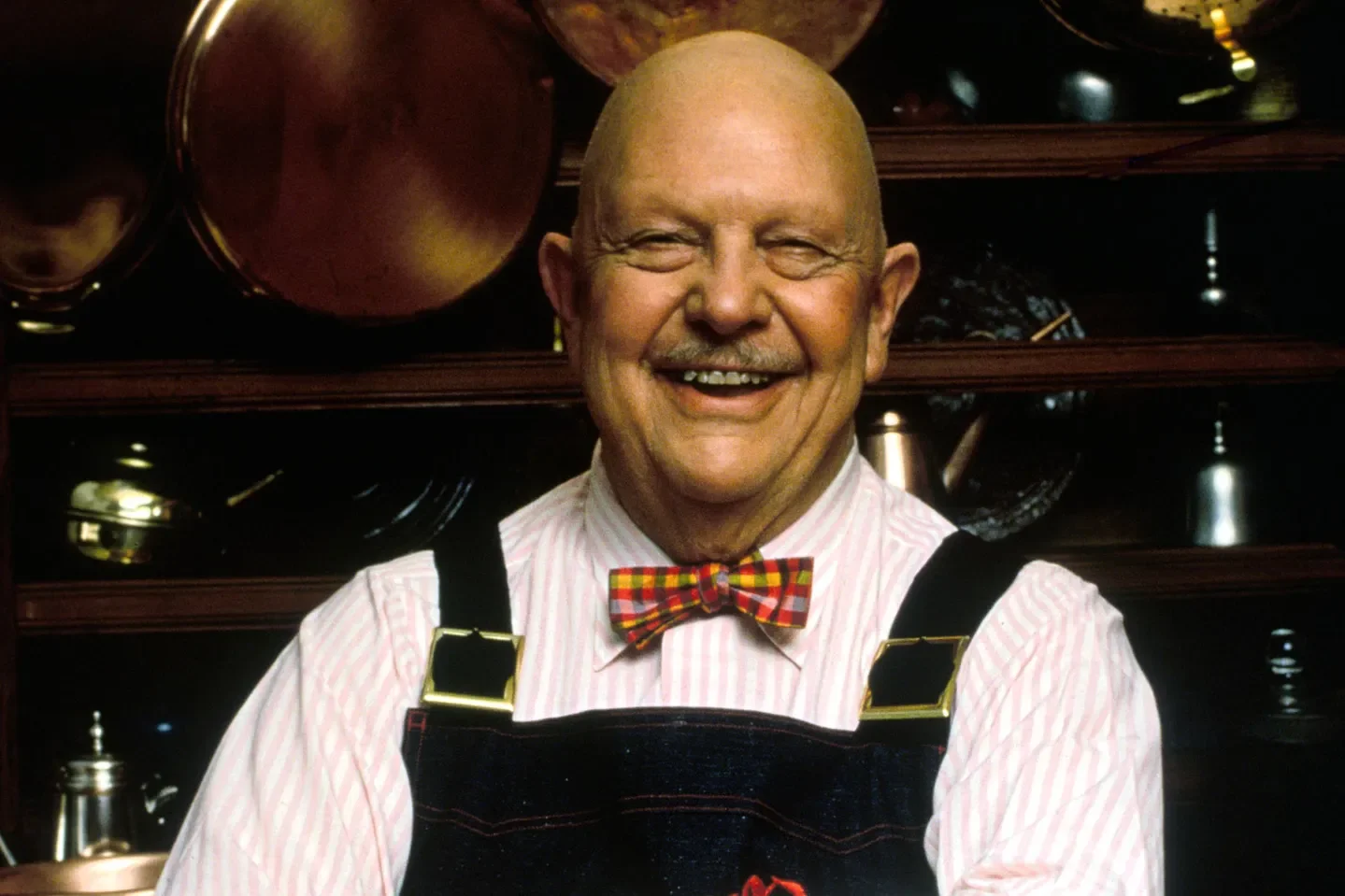
For more true facts about James Beard, please click here.
