
Commander’s Palace
There are restaurants, and then there are capital "R," twirling a mustache, pronounced in French Restaurants.
I don't need to tell you which kind of restaurant Commander's Palace is.
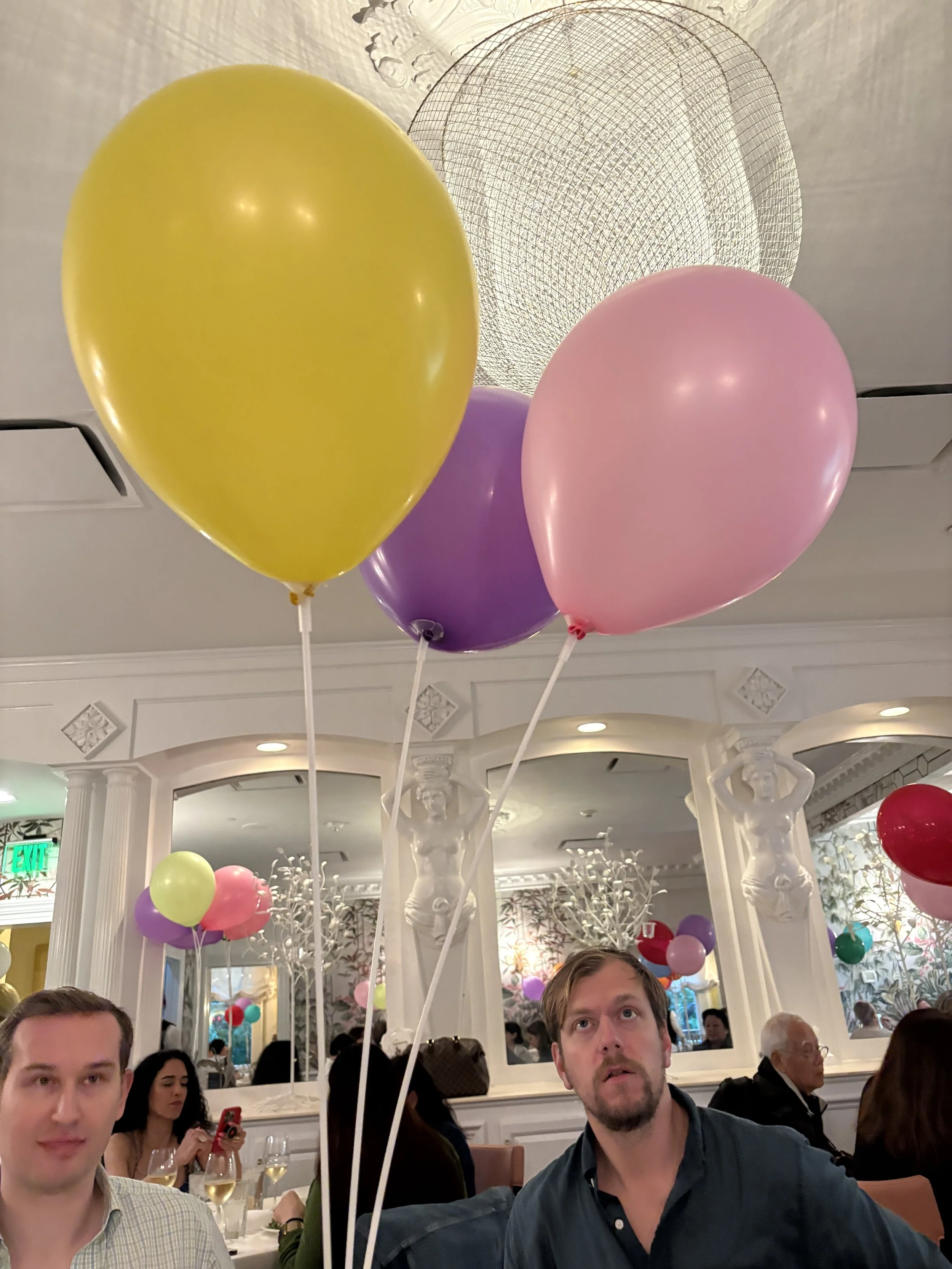
Its bright blue-and-white striped exterior leads to a two-story interior with mirrored walls, fake marble busts, and crown-molded ceilings. All the tables, preset, are covered in crisp white tablecloths and feature a centerpiece of ribbon-tied balloons that hang above you like a circus tent. Perhaps most important to its status as Restaurant, the decor has a unique point of view. The word aesthetic is an incredibly trite, overused synonym these days for "design," but the word comes from the Ancient Greek days, where physical beauty comes with a philosophy of beauty. The decor we see at Commander's Palace is just the physical manifestation of something deeper that guides everything from the service (Banquet style), to the food (New Haute Creole).
This may be a good moment to take a breather and talk about dining out for sec. You know how restaurants now are places where you go for like 1.5-2 hours and order a million things meant to be shared that are coursed when ready? Commander's Palace is not like that. One might think it's a pre-foodie restaurant that's been around for a hundred years given the Frenchness of it all, but it actually opened in 1974, three years after Chez Panisse. Emeril Lagase and a trove of other top chefs worked here. It has received multiple James Beard awards. It is one of those restaurants that changed America's "food scene."
We walked into jazz brunch soaking wet from rain we knew was coming but didn't prepare for. Two hosts greeted us with the friendliest of smiles, wearing blue jackets that matched the exterior. They checked our umbrellas and led us to our table upstairs, making sure to leave us be until our entire party was sat.
Fifteen minutes after trying to take our drink orders (and being asked kindly to return, after everyone had gone to the bathroom and whatnot), we were approached by the wait staff. Besides garlic bread made with the same New Orleans French bread used for po' boys with (pretty sure) served with a ramekin of butter to start, orders here are very much designed to be for one person and one person only. Every main course comes with an appetizer and dessert meant for one, and every person must order a main course.
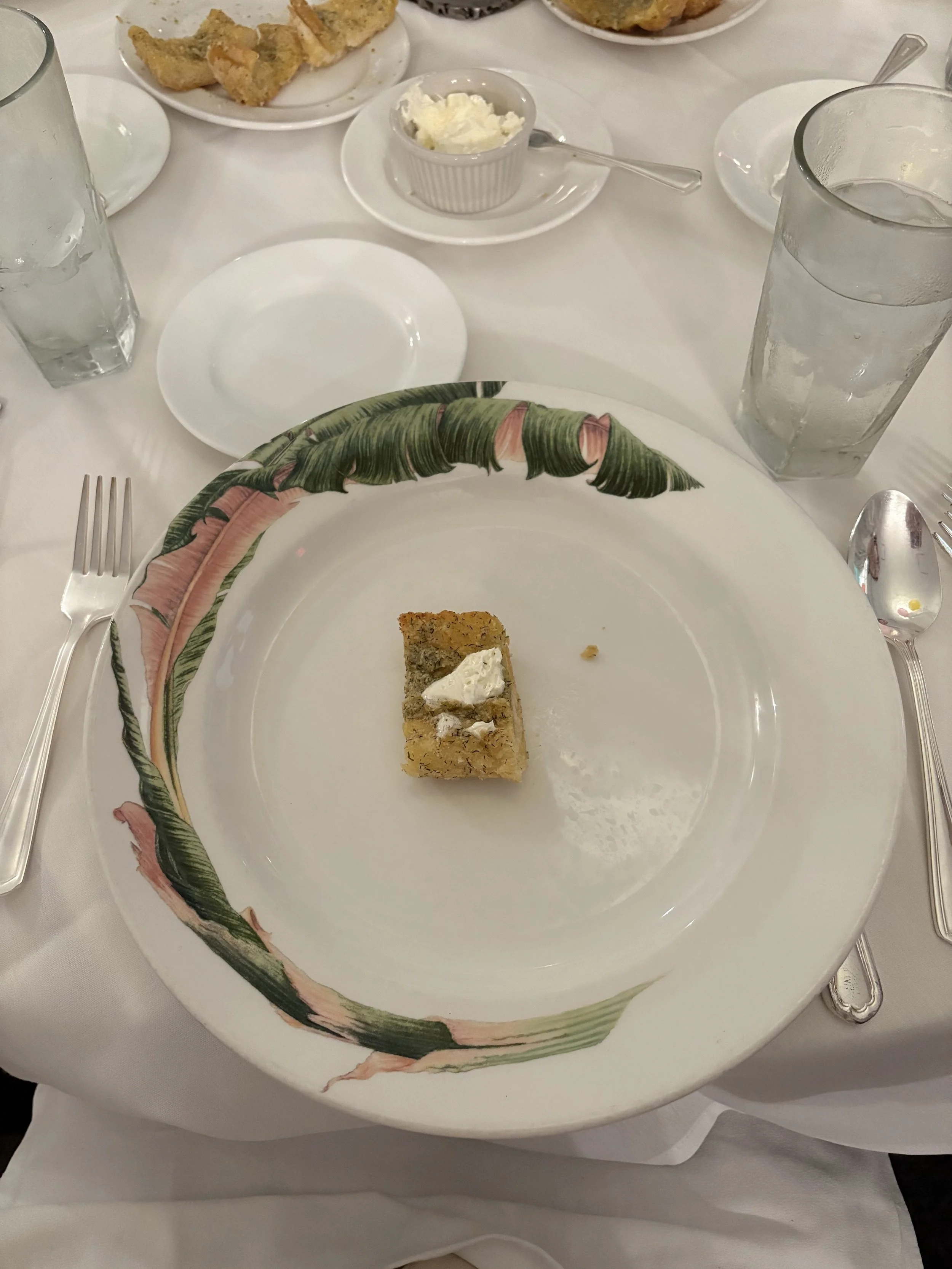
The butter really brings out the garlic bread
There were several apps that called my name: Shrimp and Tasso Henican, Lamb Pastrami "Chopped" Salad, Wild White Shrimp Remoulade. But of course I had to get the Turtle Soup. It was either a segment about here or Galatoire's on the Food Network I think where I first saw turtle soup, which I was surprised to learn does indeed contain turtle (snapping, locally caught). I can't really tell you what the turtle itself tasted like because I hadn't had it before and the soup itself was aggressively flavored – BBQ sauce comes to mind, in a good way. Opting for a table-side splash of aged sherry adds a sweet bitterness that cuts through its richness. It is highly recommended, I imagine myself saying to Ghosts of Dandies Past (they're like: we know).
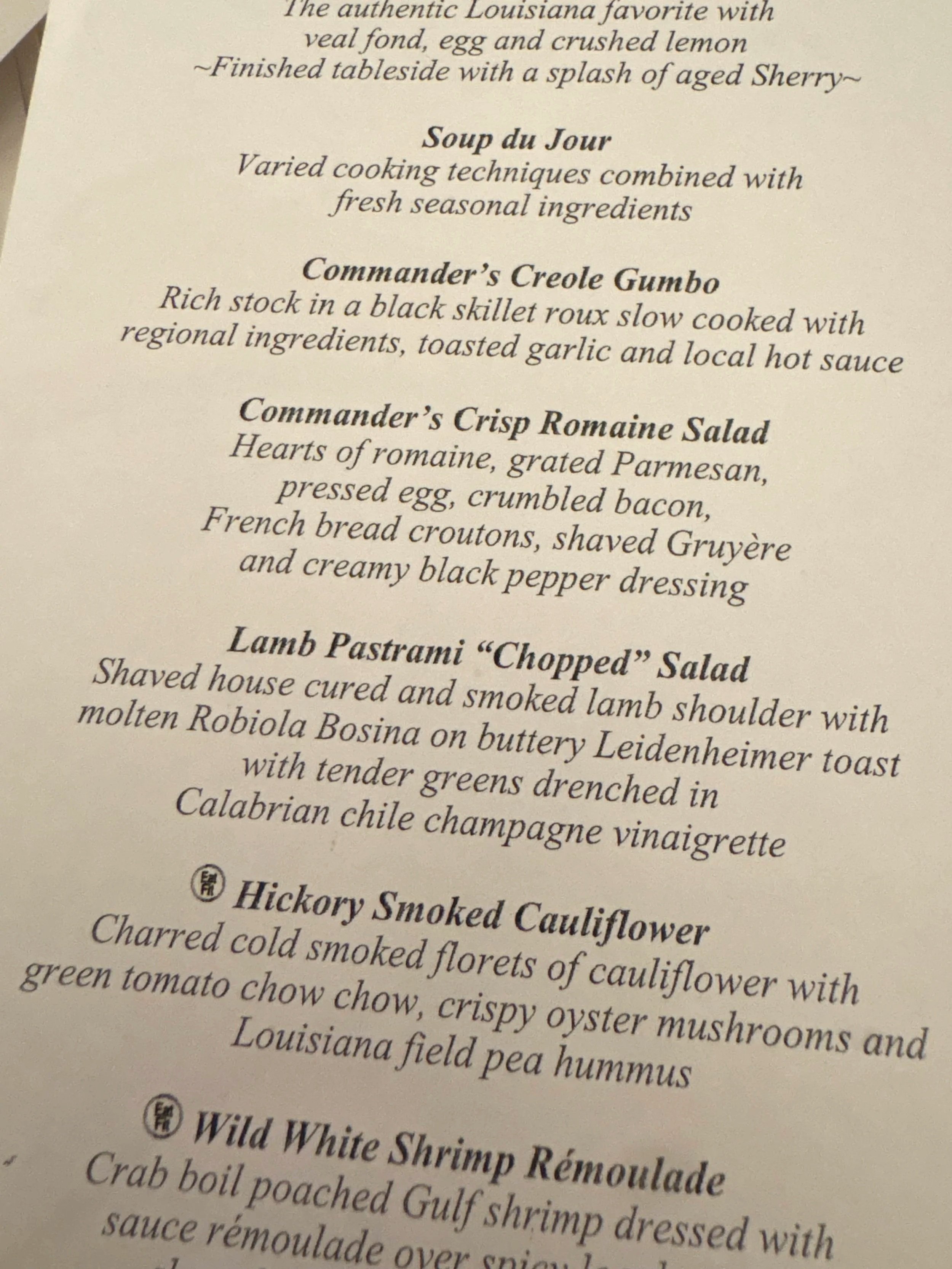
These apps are wild
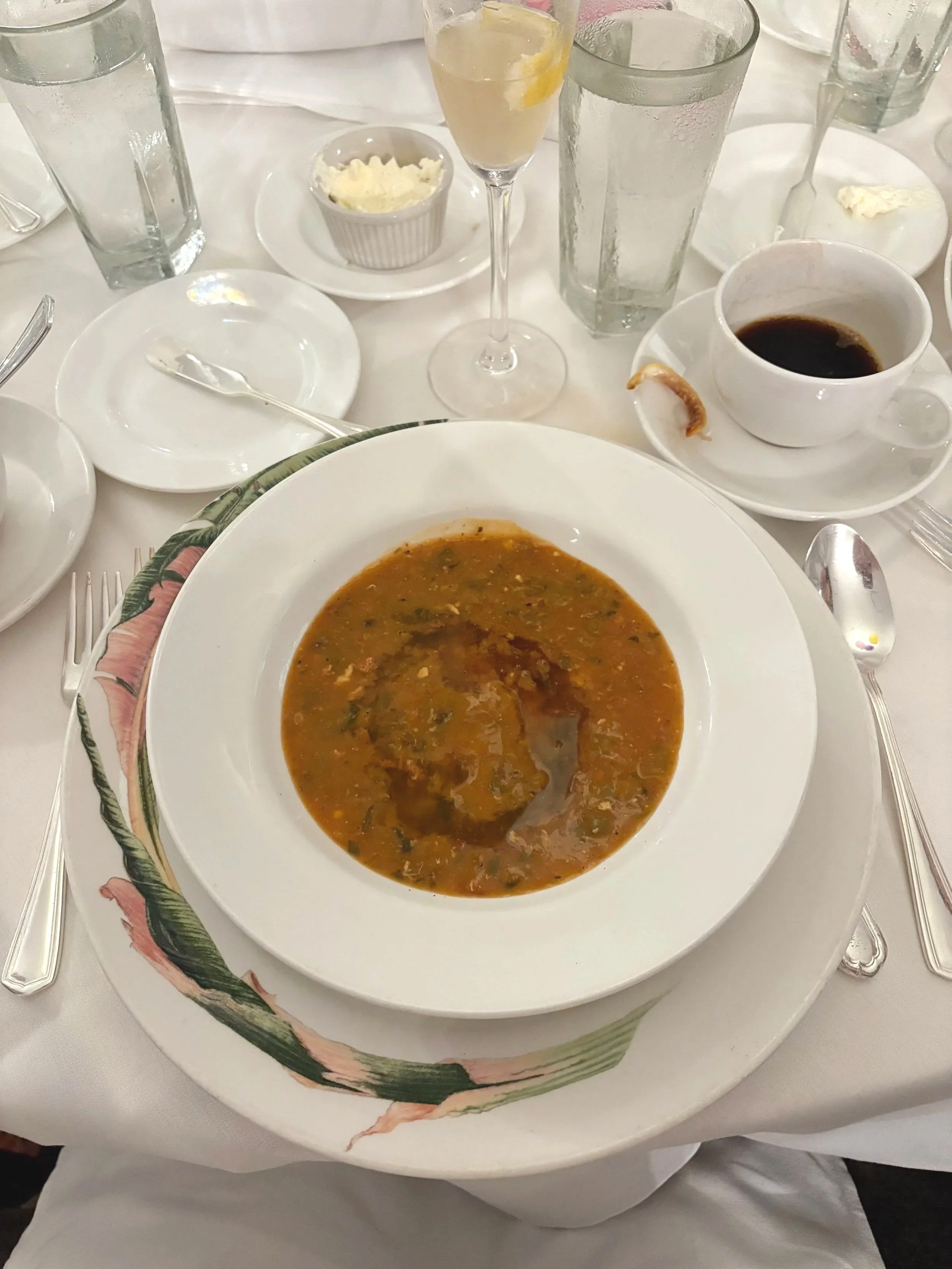
Maybe it tasted kind of like frog but not as rubbery
Our servers (one for each of our party of seven) waited for each entrée to come out before dropping them in front of us all at once, and you best believe they all had cloches on them that they removed simultaneously. I selected the Crawfish Sardou, which is like a Benedict except with fried artichoke hearts instead of English muffins. Ian opted for three appetizers instead of an entrée, but he had to order one anyway, so we got the Pain Perdu for the table, topped with a loose compote of strawberries; when strawberries are in season, people flock here just for an order. The look of the compote reminded me of the strawberry topping on a funnel cake at a B-list county fair, but it tasted like strawberry in its most concentrated form, sweet and distinct, vegetal and savory.
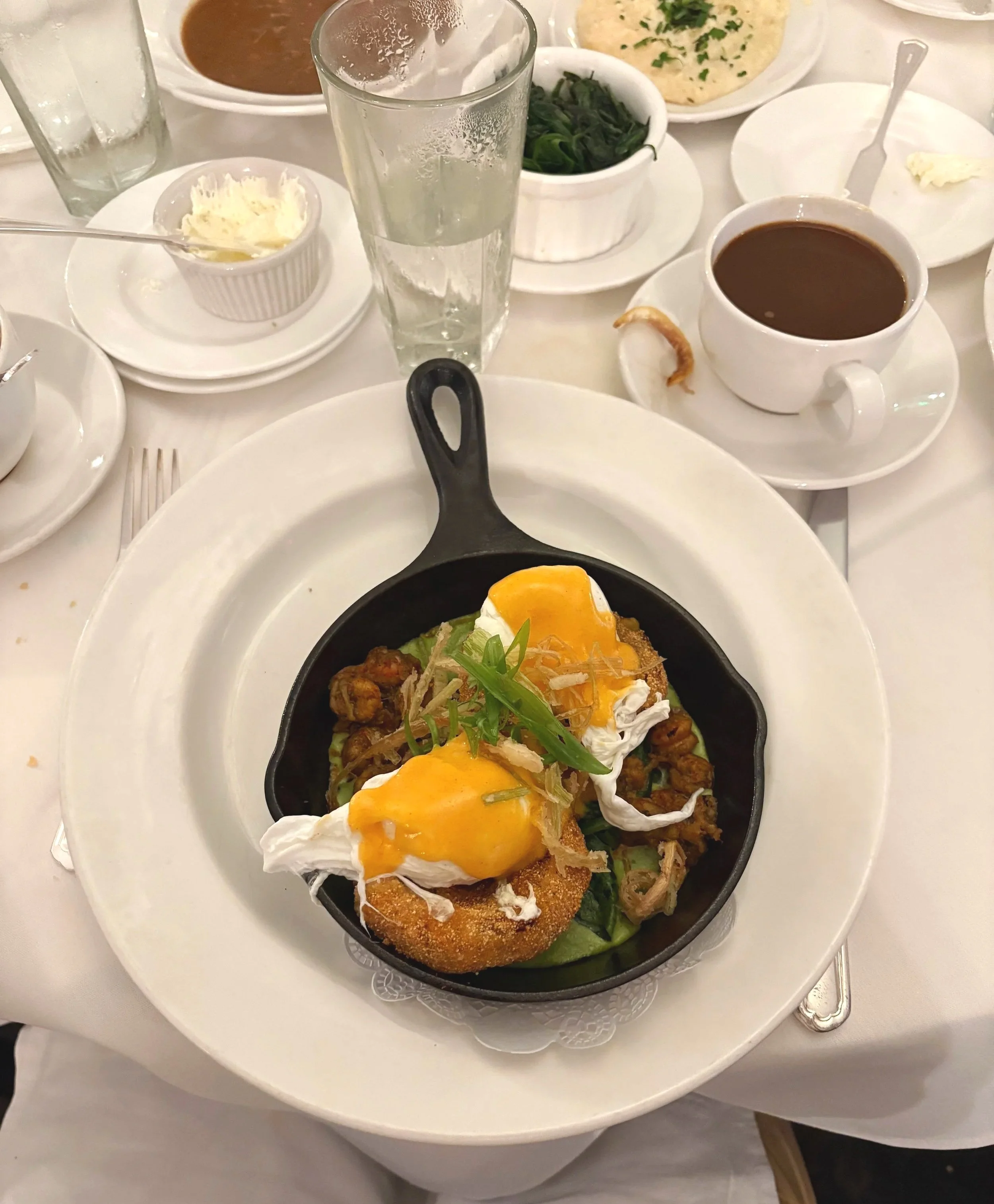
Crawfish Sardou
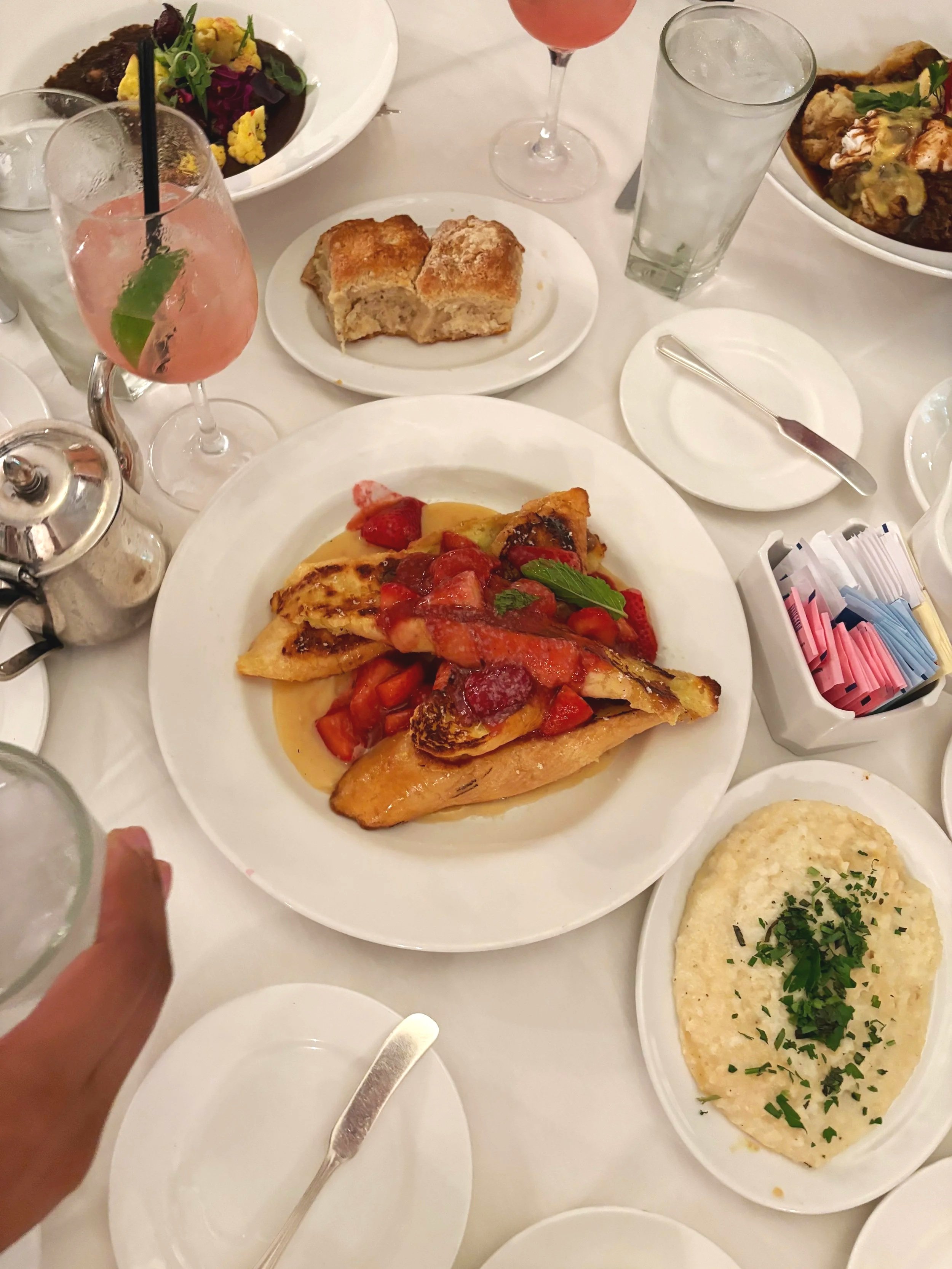
Pain and grits respectively
While my experience at Saint-Germain felt like it examined the cuisines that shaped New Orleans from a colonial distance, the cuisine of Commander's Palace felt like it emanated from this very place.
Granted, I am a coastal elite who's really only now having proper Creole food, so it is possible my comparison is wrong (and offensive). But if it makes me feel that way, is it wrong? Am I perhaps touching (like a blind man and a circus elephant) the edges of the aesthetics of New Orleans as told by Commander's Palace?
I sipped my French 75 (with brandy) and Bugs Bunny dressed up as a waiter came to mind, as did (sigh) Notes on Camp. But despite the multiple musical trios hopping from table to table, playing "The Girl from Ipanema" to "Ring of Fire;" despite their signature dessert being a bread pudding soufflé topped with meringue and served with bourbon sauce; despite the balloons and cloches and white tablecloths and striped exterior, here there is no double meaning. It is not "nodding to the exaggerated" as much as it is hitting the mark at being grandiose. As Susan says:
"There is a sense in which it is correct to say 'It's too good to be Camp.' Or 'too important,' not marginal enough.
This was French toast at the end of the day, it simply did not need to be as good as it was. It felt like Commander's is actually what all restaurants are supposed to be like and everyone else got it wrong. It is ironic that the most timeless restaurants invoke such a stubborn sense of time and place. Or perhaps it's their rootedness that lets them transcend it.
Actually, it was not French toast. It was Pain Perdu.
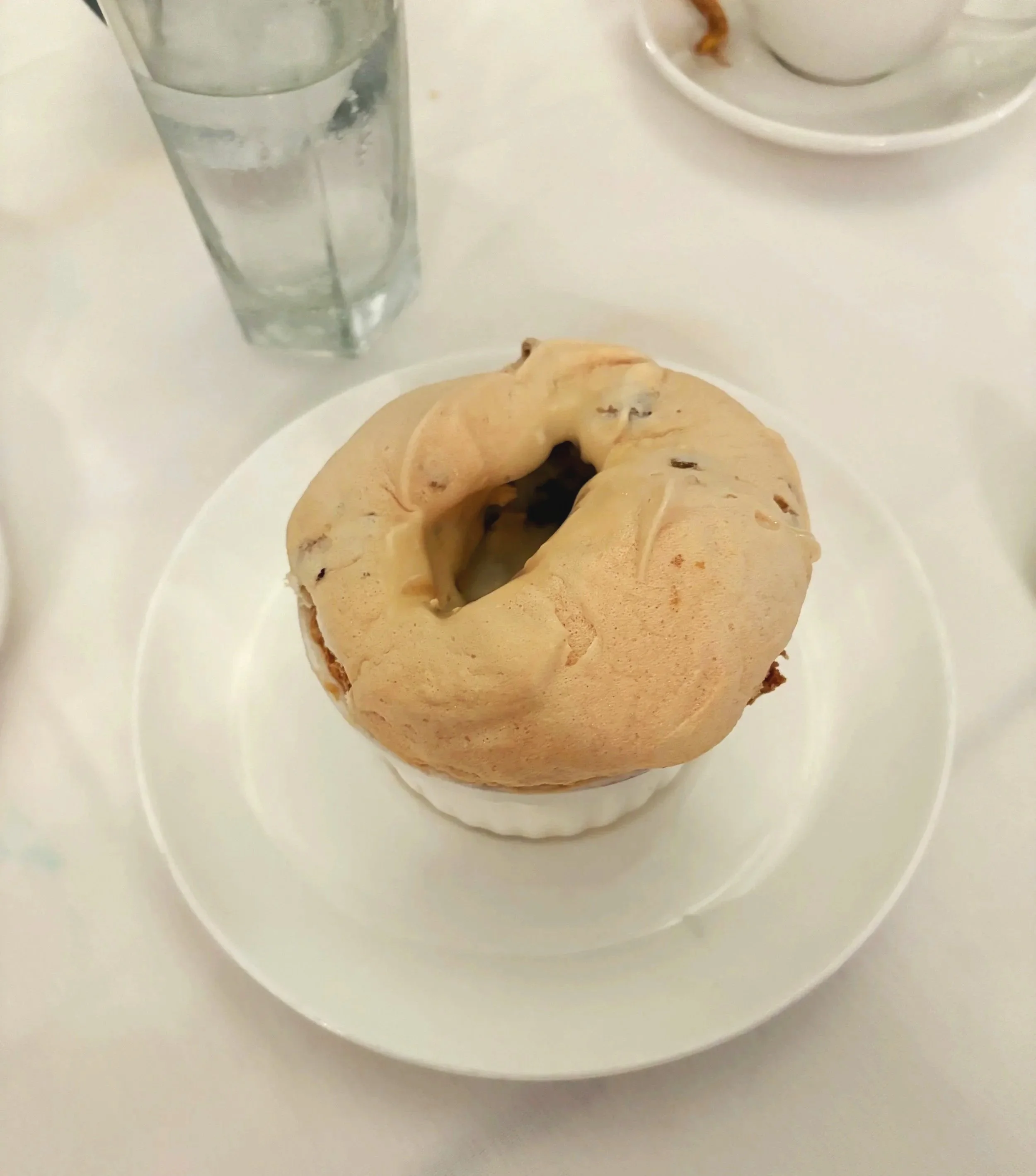
This is the hole that happens in the soufflé after you pour the hot bourbon sauce into it
